Bryan Mead, a native of Austin, Texas, was recently interviewed by a local news source upon being informed of the local rubella case within his home state – Bryan said he was shocked when he learned of this unsettling news. After all, it has been over 20 years since Texas has reported a case of rubella.
As he communicated through sign language in his interview with the local news source, he explained that his mother contracted rubella during her pregnancy with him and, as a result, he was born prematurely (two months early) and completely deaf. Needless to say, Bryan urged everyone in his interview to ensure their vaccinations to protect themselves, their family, and the population as a whole.
Before the 1941, rubella was understood to only cause a rash and perhaps a few other mild symptoms in a portion of those who became infected and caused no real known concern to the population. Throughout the 18th and early 19th centuries, rubella was thought to be a variant disease from measles and referred to as the “third disease” by the German scientists, thus gaining the common name “German measles”.
In 1866 Henry Veale, an English artillery surgeon, observed an outbreak in India and coined the name “rubella” for the disease, which comes from Latin origin meaning “little red” referring to the trademark red rash observed during infection.
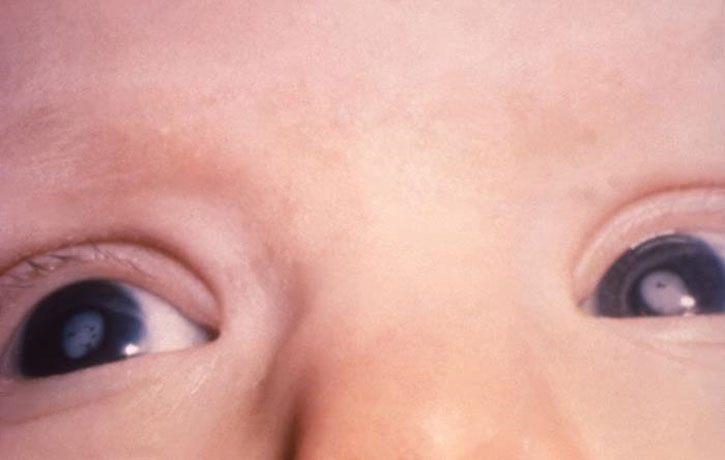
Most noteworthy, it was Norman Gregg, an Australian ophthalmologist, who discovered in 1941 that a child’s congenital cataracts was linked to the mother’s infection with rubella during her pregnancy. This finding was a catalyst in understanding the clinical significance of what we now know as congenital rubella syndrome (CRS).
With this knowledge came the ability to collect data on rubella cases – and it was clear that rubella was widespread. During the course of the last epidemic, rubella spread from a European outbreak in 1963 and ran rampant throughout the United States from 1964-1965. Within this one year in the U.S. alone, rubella infected 12.5 million citizens, killed 11,000 unborn babies, 2,100 newborns, and impaired 20,000 babies with CRS.
It wasn’t until 1969 when the rubella vaccination plan was implemented in the United States after vaccine researcher Maurice Hilleman licensed the first rubella vaccine. The rubella vaccine is categorized as a live, attenuated vaccine, which means that the virus is still viable to illicit an immune response from the body while the virulence of the strain is minimized to be harmless to the patient. A single dose of the currently utilized rubella vaccine gives more than 95% long lasting immunity which is comparable to immunity induced by a natural infection. To this day, the Centers for Disease Control and Prevention (CDC) states that the best protection against rubella is the MMR (measles, mumps, rubella) vaccine.
Due to the success of this vaccination plan, and the vaccine’s longevity, rubella was officially declared by the CDC as “eliminated” from the United States in 2004. However, rubella is nowhere near being eliminated from other parts of the globe, which serves as the source of America’s occasional rubella case (infection originating from citizens being born or engaging in foreign travel). About 10 cases of rubella are still confirmed each year in America.
Because of how uncommon rubella cases are in America, many civilians and even some physicians do not recognize the disease at first, which can cause delays in treatment and further the spread of the infection. The virus is spread from person to person by direct contact with an infected individual’s nasal secretions (mucus) or saliva (coughing or sneezing) or congenitally from a mother to her developing baby. The virus will normally have a mild presentation of a generalized illness sometimes including a fever, sore throat, cough, runny nose, inflamed and red eyes, swollen lymph nodes, and/or a rash characterized by small red circles that originates on the face and spreads to the rest of the body. Some patients, especially young women, experience joint pain and achiness. However, approximately 25-50% of those infected with rubella will not experience any symptoms at all. Don’t get too excited and think this is a positive, though. This can only enhance the infectious capability of the pathogen in the sense of infected individuals being unaware of their state and spreading the disease unknowingly – rubella is highly contagious! While this unintentional spread may not be necessarily deadly for most of the adult population, remember the harmful and even fatal effects for the population of unborn fetuses.

Considering the infectious agent causing rubella is a virus, there is no specific treatment to shorten the course of rubella. Some doctors may recommend rest, applying topical agents to the rash, and acetaminophen (Tylenol) to reduce a fever. However, infected pregnant women may have the option to take hyperimmune globulin antibiotics to help fight off the viral infection. This treatment is prepared by using the blood plasma of donors which have a high titer of specific antibodies to help fight off the infection.
Rubella can be diagnosed several different ways. Serological testing is essentially a blood test in which antibodies (a type of protein produced by the bodies’ immune system) are screened to determine if the body has encountered a specific pathogen. It is ideal to collect the blood’s serum for testing 5 days (the virus has an average incubation period of about 17 days) after the onset of symptoms in which >90% of cases will be positive for specific IgM antibodies. A second test might be necessary, though, for confirmation.
The CDC located in Atlanta, GA can perform RNA detection by quantitative real–time RT–PCR (RT–qPCR) and endpoint RT–PCR. The CDC can also provide these protocols to qualified laboratories. Viral isolation of the rubella virus can only be done at the CDC if pharyngeal and urine samples are collected.
As described in Bryan’s case above, rubella is most notably a danger for childbearing women if they are infected during the course of their pregnancy (especially within the first trimester). The virus is capable of causing congenital rubella syndrome (CRS) potentially harming the fetus including miscarriage or serious birth defects (heart problems, loss of hearing or sight, intellectual disabilities, and/or liver or spleen damage). CRS is considered to be the leading vaccine-preventable infectious disease cause of birth defects, which can also be fatal. CRS is, unfortunately, still prevalent in some African and Southeast Asian regions where vaccination coverage is still rare. To combat this, The CDC has founded the Measles and Rubella Initiative, a global partnership which is “committed to ensuring no child dies from measles or rubella, or is born with congenital rubella syndrome (CRS)”.
This plan was set from year 2012-2020 with a goal set to achieve measles and rubella elimination in at least 5 World Health Organization (WHO) regions. However, according to the 2018 assessment report, global control of rubella is “lagging, with 26 countries still to introduce the vaccine, while two regions (African and Eastern Mediterranean) have not yet set rubella elimination or control targets”. WHO remains adamant that the rubella vaccine should still be implemented into existing immunization programs in these countries, and offers technical, community, and diagnostic/epidemiologic support to both the governments and the residents of at-risk countries across the world.
With this being said, it is important to see the big picture… WHO also reports the number of countries using these programs continues to steadily increase as years go by with global coverage at about 69%, and the number of reported rubella cases significantly declining by country since the start of the 21st century, marking an outstanding victory in the fight to one day eradicate a deadly disease from our planet.
Unfortunately, Bryan’s (along with the CDC, WHO, among many other institutions) plea for sufficient vaccinations has not resonated with all citizens. In his state of Texas alone, up to 3% of children are not fully vaccinated, putting the entire population, including unborn children, at risk as we are so clearly seeing at the moment. This trend reaches across our nation, with vaccine exemption rates for children rising each year. Within less than one recent month, Texas alone has reported TWO vaccine preventable disease cases since 1999 (rubella and measles).
I would like to conclude with the CDC’s guidelines for the rubella vaccine. Children are to receive two doses of the MMR vaccine, starting with the first dose at 12-15 months of age, and the second dose at 4- 6 years of age. Teens and adults should also be up to date on their MMR vaccination. For those citizens who may not have health insurance or if the insurance does not cover vaccines for your child (almost all insurances do provide coverage), the Vaccines for Children (VFC) Program can offer help. This program helps families of eligible children who might not otherwise have access to vaccines.
Sources and Supplemental Information
Bryan’s story: http://www.KVUE.com
https://www.historyofvaccines.org/content/articles/rubella
 Thank you, science